
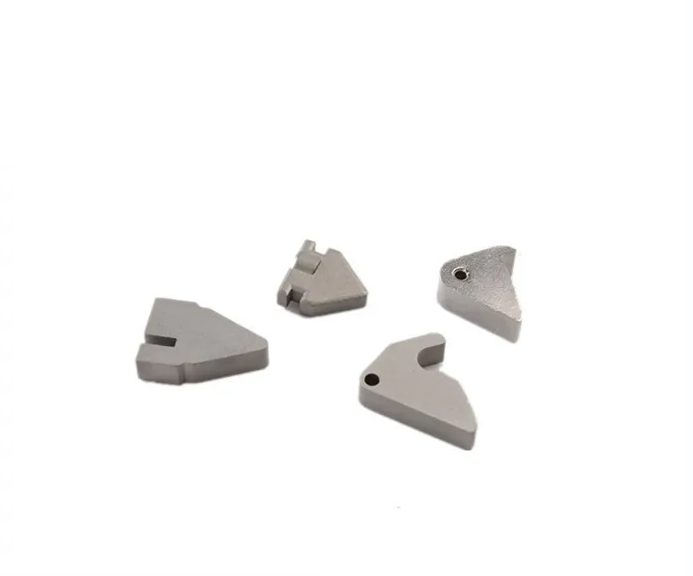
Product example
Spring Bolt and Latch Components
Compact latch forms with angled contact faces. Review engagement, return motion and the connection to the lock mechanism.
Lock and security components are the metal parts that carry the locking, guiding and contact functions in a lock — spring bolts, deadbolts, cylinder bodies and cores, levers, cam parts and smart-lock hardware. SINTS manufactures them by powder metallurgy (PM), metal injection molding (MIM) or machining, chosen by load path, wear surface and annual volume.
Compact latch forms with angled contact faces. Review engagement, return motion and the connection to the lock mechanism.
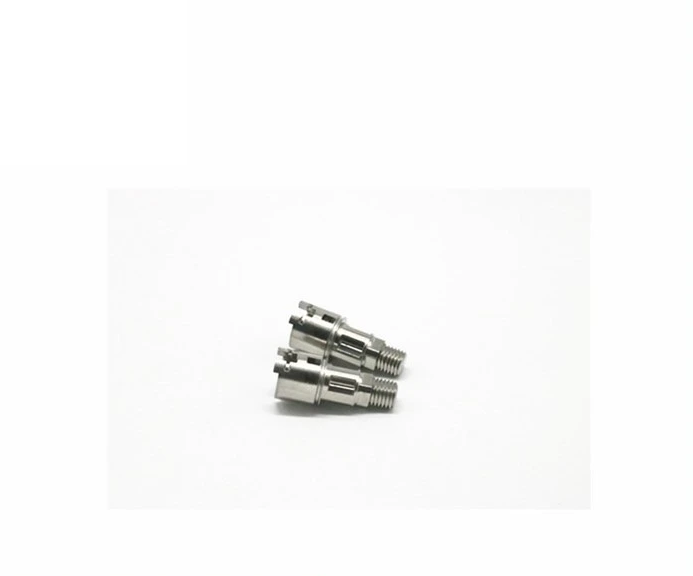
Cylindrical components with slots and stepped surfaces. Define the bore, axis and mating hardware from the lock assembly.
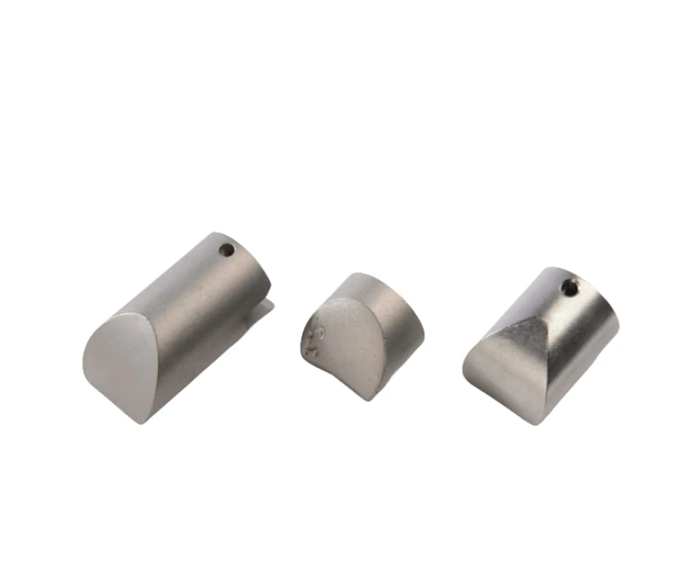
Locking elements with rounded and stepped profiles. Specify travel, support and engagement surfaces.
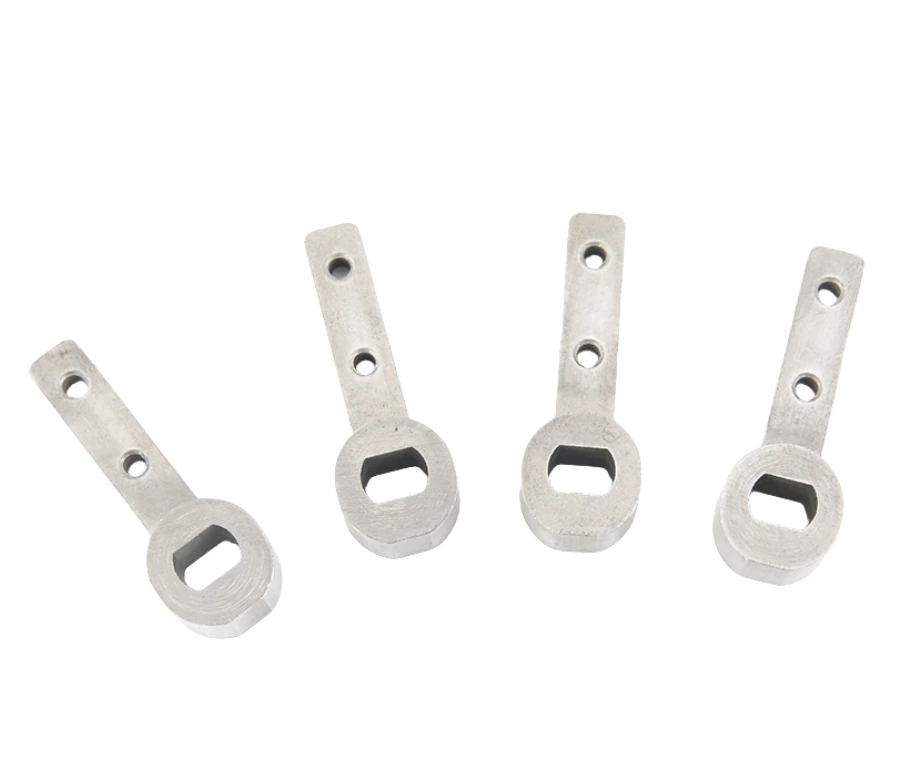
Lever-like components with connection holes. Hole spacing and the contact profile should follow the mating mechanism.
Examples from the SINTS product catalog, shown for component identification. These are custom parts, not stock specifications. Dimensions, material, supply scope and acceptance requirements are confirmed from your project drawing.
Working travel, engagement surfaces, mating parts and return arrangement.
Contact load, lubrication, corrosion exposure and cleaning conditions.
Individual component or assembly, material condition and required finish.
Fit and operating tests, sample quantities and annual volume per variant.
Explore each component in detail, including its interfaces, manufacturing review and drawing requirements.
The spring-bolt examples show different contact profiles. For a similar part, share the relationship to the spring, actuator and lock body, including travel and guiding clearance. Contact surfaces, connecting holes and the final finish can then be reviewed against the required motion.
The cylinder reference contains stepped and slotted forms. Mark the functional axis and the surfaces that drive or retain the mating hardware. Agree dimensions and operating checks in the finished condition, including any coating or heat treatment specified by the project.
The part drawing and its assembly determine the manufacturing route and the inspection plan.
Lock-body fit, connection holes, travel and engagement geometry.
Return action, sliding contacts, cycle requirements and mating materials.
Appearance, corrosion requirements and dimensions after finishing.
Fit and action checks using the intended mating lock hardware.
Lock and security components carry the locking, guiding and contact functions in a lock. These answers cover process selection, wear surfaces, security boundaries and documentation.
Repeat-volume parts that combine a simple structural form with a small amount of genuine three-dimensional detail are the usual targets: spring bolts, latch and cam parts, cylinder bodies and cores, levers, guides and small retention hardware. The decision then turns on the load the part carries, the surface that wears and whether the part is a security-critical element.
A locking mechanism is a repeated-cycle mechanism, so the surfaces that slide, engage or carry the bolt usually decide the part's service life. Hardness, surface condition, density and lubrication all affect how those surfaces behave, which means a part can be structurally adequate yet still unsuitable if its contact surfaces are not controlled. Those interfaces belong on the drawing as requirements, not as outcomes.
That is a decision the customer makes, not the manufacturer. SINTS reviews whether a component can be produced to the stated geometry, material and volume, and which route fits. SINTS does not certify or validate the security rating of a lock, and any security, pick-resistance or attack-resistance testing remains the customer's own responsibility and risk assessment.
Start with the axis and the engagement features. The cylinder body or core carries the keyway or pin interface, a rotational datum and a set of engagement features that must align with the rest of the lock, so concentricity, axial datum and the tolerance on the engagement surfaces matter more at screening stage than overall dimensions. Those features are what the process has to hold.
Send the drawing, the part's role in the locking chain, the load or force it carries, the surface that wears or engages, the required hardness or surface condition, the material of mating parts, annual volume and any documentation the program needs. That combination is what allows a manufacturing review rather than a process guess.
Include the lock assembly, motion or travel, guiding fits, finish requirements and planned production quantity.