
By SINTS · Drawing-based engineering and sourcing guidance.
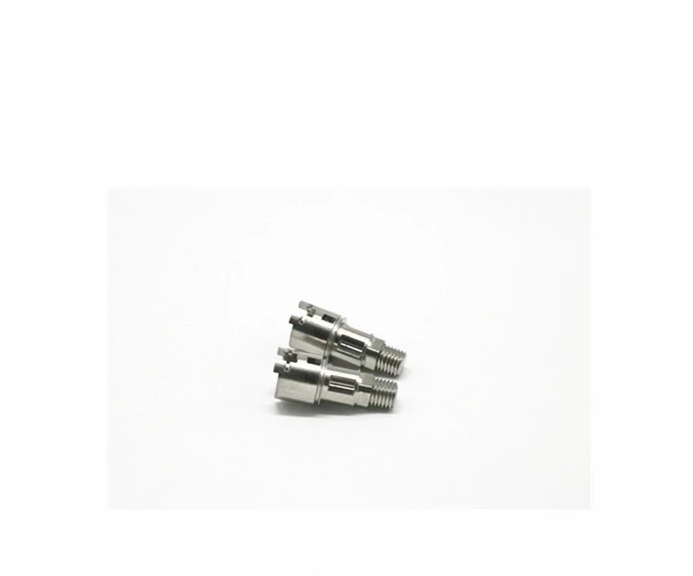
Compare routes against one controlled definition
Compare MIM and CNC using the same final drawing, material condition, functional requirements and demand assumptions. MIM may be worth evaluating for repeat production of complex small components, while a machining-led route may suit other geometry or program needs. Neither route can be selected responsibly from part size or annual volume alone.
Start by separating requirements that are fixed from features that engineering may change. Supply a revision-controlled model and drawing, identify assembly interfaces and describe the part's function. The result of this review should be a documented route proposal with open points, rather than a universal rule that one process is cheaper or more precise.
Map geometry to manufacturing access
For CNC, ask how cutting tools reach the features and how many setups or special fixtures are proposed. For MIM, ask engineering to review molding direction, parting, transitions and the handling and support strategy through the route. Keep these as questions for the actual geometry, not assumptions based on a rendering.
Identify features that could be consolidated or simplified without changing function. Compare the complete assembly if consolidation is being proposed, including any inspection or service implications. A change that removes one component may create a new critical relationship elsewhere. Design approval remains separate from acceptance of the manufacturing quotation.
| Review item | CNC discussion | MIM discussion |
|---|---|---|
| Geometry | CNC access and setups | MIM forming and handling review |
| Critical dimensions | Machined features and fixtures | As-sintered versus finished features |
| Material | Specified stock and delivery condition | Proposed sintered material condition |
| Program | Setups, fixtures and recurring cost | Tooling, samples and recurring cost |
| Approval | Prototype scope and final inspection | Production-representative validation |
Mark the dimensions that decide function
Highlight datums, fits, positions and surface requirements that affect assembly. Ask each supplier to identify which features are achieved by the primary process and which need finishing. Compare the final inspection condition and measurement setup, especially for thin or easily distorted features.
Avoid applying an unnecessarily tight general tolerance to every surface as a shortcut. At the same time, do not remove a requirement merely because it complicates one route. Discuss the functional reason with the design owner, document any approved change and request a revised quotation on that same definition from both routes.
Check material equivalence and sample relevance
A familiar grade name does not by itself establish equivalent behavior between different manufacturing routes. Ask about the proposed material condition and the properties relevant to the application. Corrosion, wear, magnetic response or other controlled requirements need their own assessment and evidence where applicable.
A CNC prototype can help evaluate form and assembly, but it does not validate every aspect of a later MIM production route. Identify which prototype results can be carried forward and which require production-representative samples. Keep material and process changes visible in the approval record, even when the geometry is unchanged.
Compare program cost and change exposure
Provide realistic demand scenarios, order quantities, launch dates and expected design stability. Compare tooling, samples, fixtures, secondary operations, inspection and recurring supply on an equivalent basis. If the design is likely to change, ask what that would mean for tooling and reapproval rather than assuming a fixed break-even quantity.
Before selecting the route, close any differences in specification, supply scope and validation assumptions. A useful recommendation explains why the proposed route fits this part, identifies remaining risks and states the evidence needed for approval. Send the drawing and these assumptions together so that the manufacturing discussion can produce an actionable answer.
Example: a lock mechanism with a critical sliding interface
Imagine a compact lock mechanism with a shaped body and a sliding interface. A CNC sample has shown that the assembly moves, and the buyer is considering MIM for repeat production. Separate the useful prototype evidence from the open production questions. Confirm the approved clearance and datums, identify the surfaces that control movement, and ask whether those surfaces would be delivered as sintered or finished in the proposed MIM route.
Then compare the two quotations using that same final condition, including secondary work and sample approval. If the MIM proposal changes a transition or adds a finishing allowance, obtain design approval before treating it as equivalent. A successful machined assembly trial remains valuable, but it does not settle the behavior of every later material and process combination. This is a hypothetical design review, not a customer success story or a claim of savings.