
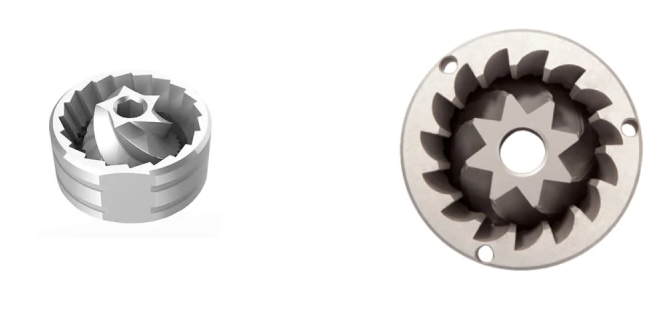
Product example
Conical Coffee Grinder Burrs
Paired burr forms shown from two views. Review the mating geometry, rotation direction and mounting datums together.
Coffee machine and home appliance components are the small metal parts inside grinders, brewers, portafilters and appliance mechanisms — burr sets, portafilter hardware, levers, cams, hinges and structural motion parts. SINTS manufactures these by metal injection molding (MIM), powder metallurgy (PM) or machining depending on geometry, volume and the functional surface involved.
Paired burr forms shown from two views. Review the mating geometry, rotation direction and mounting datums together.
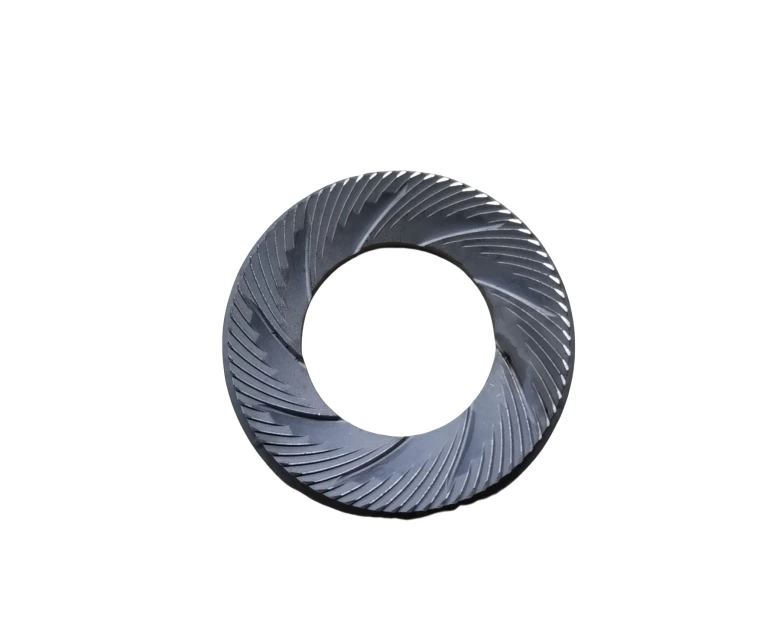
A ring-shaped burr with a patterned grinding face. The mounting face, centering feature and cutting geometry need separate drawing requirements.
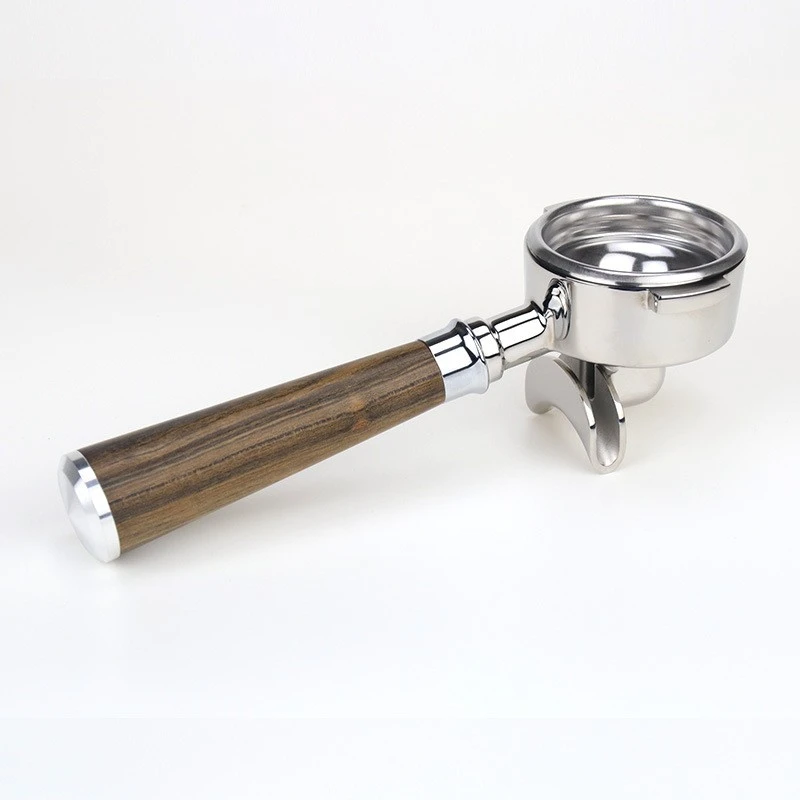
An assembled portafilter reference showing the metal head and handle connection. Specify the individual metal components required for your project.
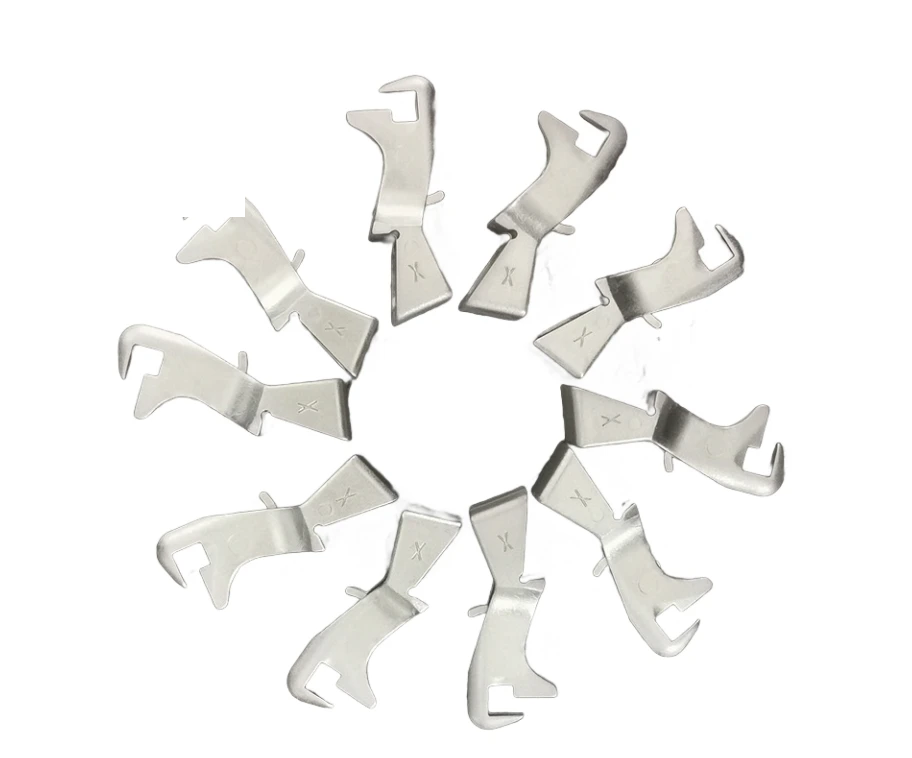
Formed mechanism parts with forks and contact features. Define their mating parts, working motion and assembly clearances.
Examples from the SINTS product catalog, shown for component identification. These are custom parts, not stock specifications. Dimensions, material, supply scope and acceptance requirements are confirmed from your project drawing.
Mark the burr, metal head, connector or mechanism component required.
Mating burr, cutting profile, rotation direction, mounting datums and runout.
Grade, food-contact requirements, cleaning media and surface condition.
Annual quantity per variant, sample tests and required documentation.
Explore each component in detail, including its interfaces, manufacturing review and drawing requirements.
The conical and flat burr examples show two different grinding geometries. For a similar project, provide the mating burr and mounting drawing so the tooth form, rotational datum and fastening features can be assessed together. Agree any machining or grinding of functional surfaces separately from forming the body.
The portafilter photograph provides assembly context; it does not define a complete appliance supply scope. Mark the metal head, connector or other component required, and include handle attachment, cleaning conditions and appearance requirements.
The part drawing and its assembly determine the manufacturing route and the inspection plan.
Mating burr, rotation direction, centering and permitted runout.
Fasteners, fits, working travel and repeatable locating surfaces.
Contact with food or cleaning agents, surface finish and project-specific documentation.
Agreed fit, grinding or operating checks using the intended assembly.
Coffee machine and home appliance components are the small functional metal parts inside grinders, brewers and household mechanisms. These answers cover process selection, food contact and the inputs that make a component review useful.
They are the small metal parts that make an appliance work rather than the outer shell: grinder burr sets, portafilter heads and hardware, brewing and dispensing levers, cams, hinges, latches, drive parts and structural brackets. Most of them are produced in repeat volume once the appliance platform is stable, which is what makes near-net-shape processes worth evaluating.
Burr sets are a machining-led component, because the cutting geometry, tooth form, hardness and edge condition are the function of the part. Near-net shaping can form the burr body or blank and may reduce stock removal, but the cutting face is still established by a finishing operation. The mating burr, rotation direction, centering and permitted runout all need to be on the drawing before the process route is fixed.
Food contact is a project-specific requirement decided by the media, cleaning method, temperature and the customer's own applicable regulations, not by the process name. Where a part touches coffee, water or cleaning agents, the material grade, surface condition, porosity and any finishing step are reviewed together, and the required documentation is agreed during qualification rather than assumed from a standard material list.
Sometimes. Near-net shaping becomes attractive when the part carries integrated features — a hub with a cam, a lever with a pivot boss, a bracket with formed locators — that would otherwise need several machining operations. It stays unattractive when the part is essentially a turned or milled profile at modest volume, or when a visible or sealing surface has to be produced by machining anyway.
Send the part drawing, its function in the assembly, the mating parts and fits, the material and food-contact or cleaning conditions, the required surface finish or appearance, annual volume per variant and any target cost driver. Those inputs usually show that one or two internal parts, not the whole assembly, are the real candidates.
Send the part drawing, mating assembly, material requirements, cleaning conditions and expected annual quantity.