
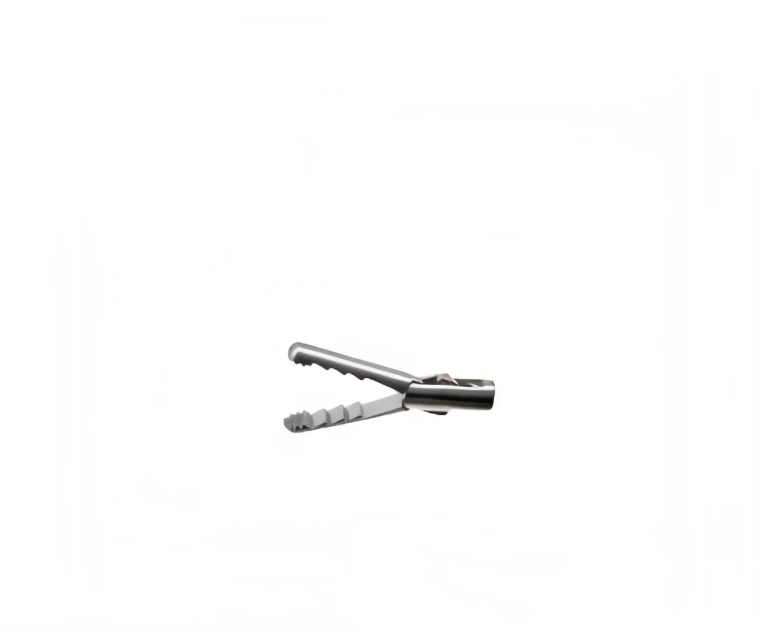
Product example
Grasping Forceps Jaw Components
A forceps assembly reference showing jaws and their connection. Identify the individual parts and alignment features required.
Medical device components are the metal parts inside surgical and diagnostic instruments — forceps jaws, tweezer and clip parts, instrument handles and the alignment and edge features that make them work. SINTS produces these by metal injection molding (MIM), powder metallurgy (PM) or machining. For implant and patient-contacting applications, project-specific material, verification and regulatory review is required.
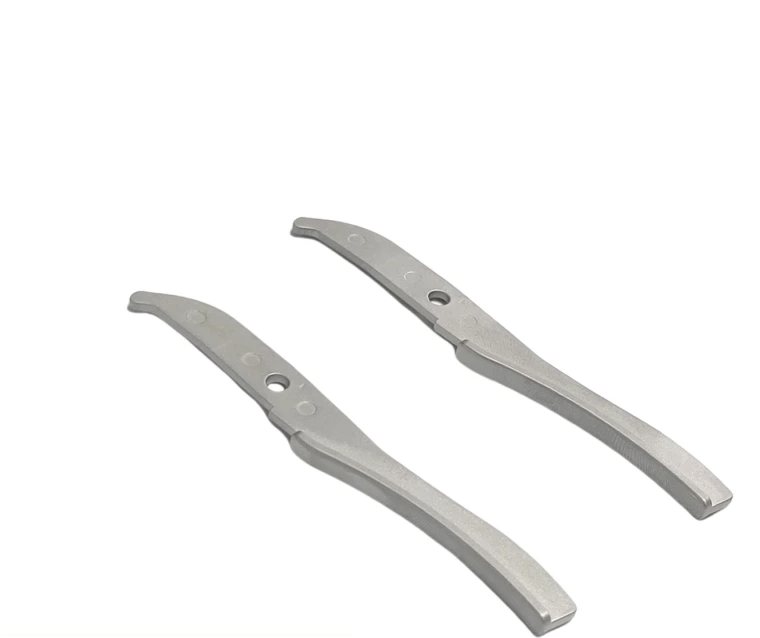
A forceps assembly reference showing jaws and their connection. Identify the individual parts and alignment features required.
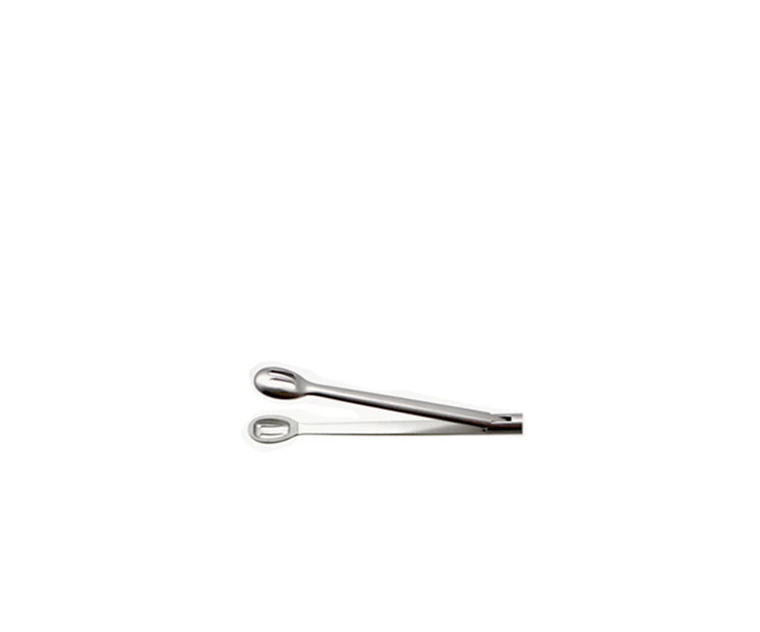
A tweezer-style instrument example. Define component scope, contact surfaces, alignment and finishing requirements.
Paired slender handle forms with holes and curved profiles. Mating position, edge condition and functional surfaces need drawing-level definition.
Examples from the SINTS product catalog, shown for component identification. These are custom parts, not stock specifications. Dimensions, material, supply scope and acceptance requirements are confirmed from your project drawing.
Explore each component in detail, including its interfaces, manufacturing review and drawing requirements.
The paired handle examples show why a component drawing should be read with its mating instrument. Mark pivot or connection holes, contact surfaces and the required edge condition. Agree dimensional inspection and sample assembly checks before confirming the manufacturing route.
An assembly photograph helps explain the jaw and connection arrangement. For a quotation, identify the individual metal parts to be supplied and provide their drawings. Material, final surface condition, cleaning and traceability requirements must be defined by the project.
The part drawing and its assembly determine the manufacturing route and the inspection plan.
Individual part drawings, mating instrument and intended component function.
Hole positions, jaw or handle alignment, contact faces and edge condition.
Roughness, finishing, cleaning and handling requirements specified by the customer.
Material records, traceability, inspection and project-specific validation requirements.
Medical device components are the metal parts inside surgical and diagnostic instruments. These answers cover process selection, edge and surface requirements, documentation and the boundaries of a manufacturing review.
It covers the metal parts that make an instrument function — grasping jaws and tips, tweezer and clip components, instrument handles and their alignment features, linkages and the retention hardware around them. These parts are typically small, produced in repeat volume and judged on functional geometry, surface condition and documentation, so the review scope is narrower than for a device as a whole.
It can be evaluated where the geometry is genuinely three-dimensional — integrated hinge details, formed gripper profiles, combined handle and jaw features — and where volume justifies tooling. The functional geometry, the edge condition at the tip and the final surface then become explicit requirements, and any operation needed to achieve them is planned as part of the route rather than added later.
Define exactly which metal component is being quoted, separately from the finished instrument. A photograph of an assembled instrument is context, not a supply scope, and clarifying whether the scope is a raw component, a component with secondary operations, or a sub-assembly prevents a mismatch between what is quoted and what is expected.
Material and process documentation can be prepared for the manufacturing scope and agreed during supplier qualification, including material declarations and inspection records for the quoted part. What cannot be supported is a claim that a component is suitable for a specific clinical or patient-contacting use: implant-grade, sterility-compatible or regulatory claims require project-specific material selection, verification and regulatory review and are not asserted here.
Send the part drawing, the component's function in the instrument, the critical geometry and edge requirements, the required surface condition, the material and any cleaning or sterilisation exposure, the documentation the program needs and the annual volume. Those inputs let the review address manufacturability and documentation without overstepping into clinical or regulatory conclusions.
Send the component and assembly drawings, material specification, finishing, documentation and sample acceptance requirements.