
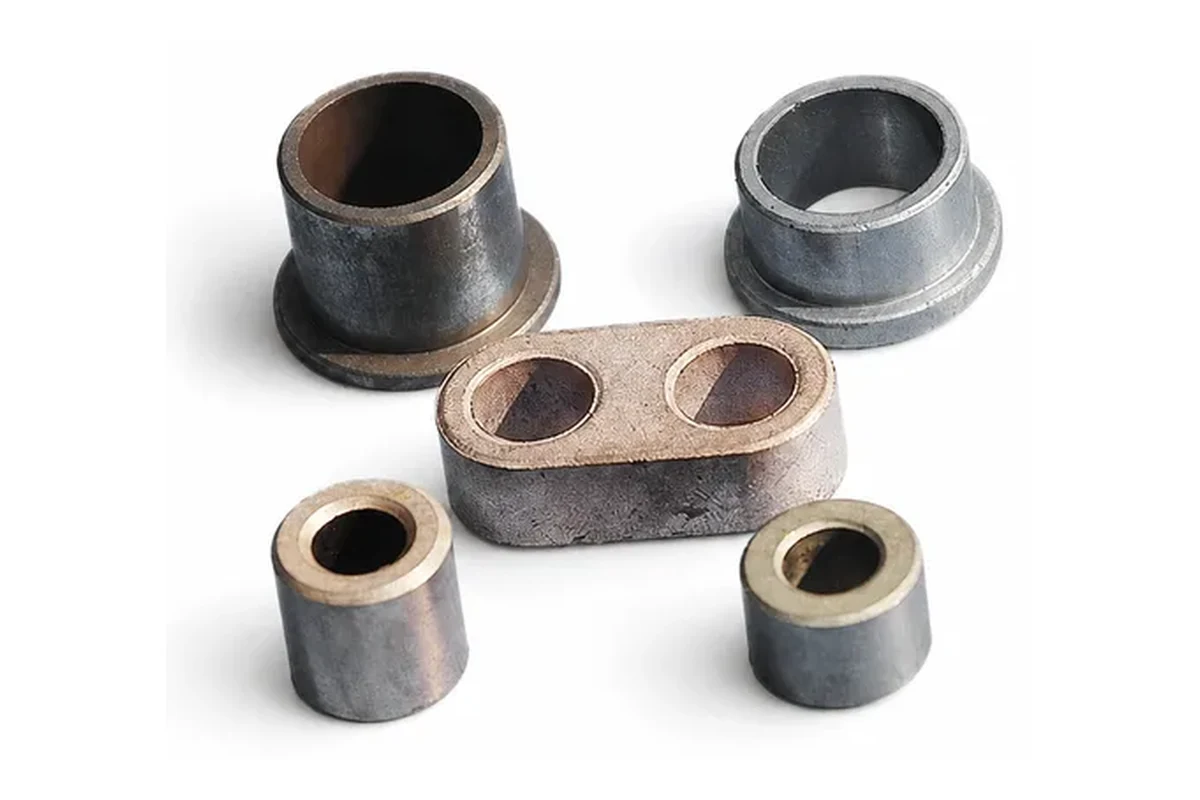
What metal bushings do in a shaft-and-housing assembly
Review this component together with its mating parts and delivered condition. The interfaces below define the drawing information needed to assess forming, finishing and inspection.
The intended motion determines whether the bore is a bearing surface or a locating feature.
Shaft, housing and installed-clearance interfaces
Define the shaft and housing fits together.
A press fit can change the installed bore, so inspection before assembly may not describe the working clearance.
Why does installed bore size matter?
A sleeve is part of a shaft-and-housing system.
Its free-state dimensions describe the manufactured part, while the installed condition describes the working interface.
Keeping those two conditions explicit helps distinguish a manufacturing error from an assembly-fit issue.
Press-and-sinter versus turning for bushing profiles
Compare press-and-sinter with turning for the actual profile and quantity.
Sizing or bore finishing may be needed; an oil-impregnated design requires an agreed material and lubrication specification.
The proposed route is confirmed for your drawing, material and quantity. An image does not establish a fixed tolerance or a complete process specification.
Compare manufacturing capabilities →Bushing material, porosity and oil-impregnation requirements
Specify material and final condition against the shaft, housing, motion and lubrication.
If oil impregnation or a particular porous structure is required, state it explicitly.
The mounting method and final bore condition must be considered together rather than assuming every powder metal sleeve is an oil-bearing bushing.
Review material-selection information →Bore, concentricity and installed-clearance checks
Check bore size and form in the agreed state, concentricity where relevant, flange seating and installed clearance.
Include load, speed and lubrication in the approval brief.
Specify the drawing revision and the condition in which each dimension is inspected. Record the agreed dimensional and functional checks before sample approval.
Quality documentation →Prepare a Product-Specific RFQ
- Component definition. Send the 2D drawing and 3D model, where available, with the drawing revision and the requested part or assembly scope.
- Mating information. Include the assembly references needed to define the interfaces discussed above.
- Delivered condition. State material, finishing and inspection requirements, identifying any items that need a manufacturing recommendation.
- Supply plan. Include sample needs, expected order and annual quantities, packaging requirements and target timing.
Product Questions
Are all powder metal bushings self-lubricating?
No. Oil impregnation and the required porous structure must be specified. A locating sleeve or a sealing interface may need a different design.
Why does installed bore size matter?
A sleeve is part of a shaft-and-housing system. Its free-state dimensions describe the manufactured part, while the installed condition describes the working interface. Keeping those two conditions explicit helps distinguish a manufacturing error from an assembly-fit issue.
Which checks should be included in gear or support approval?
Check bore size and form in the agreed state, concentricity where relevant, flange seating and installed clearance. Include load, speed and lubrication in the approval brief.
Technical Context
The product-specific notes above identify drawing-review questions. General process and material references are collected separately; they do not verify a material grade, production qualification or performance claim for the pictured part.
Manufacturing and material references →Metal bushing reference library
Component reference and drawing inputs
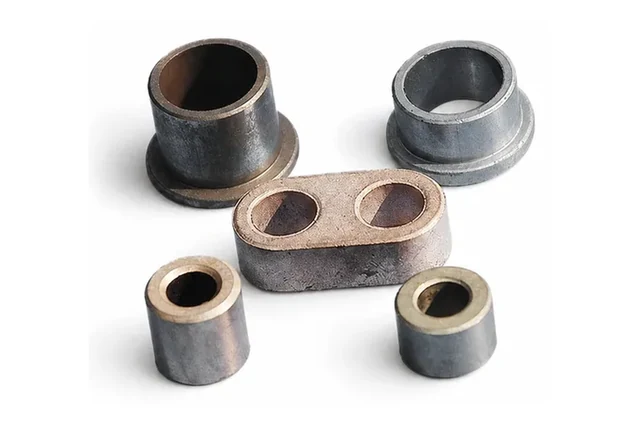
Plain and flanged bushing references
Define the functional datums, mating interfaces and final condition for this part.
Discuss a similar component →Representative custom component references. Dimensions, material, manufacturing route and validation requirements are confirmed from your drawing; these are not off-the-shelf catalog items.