
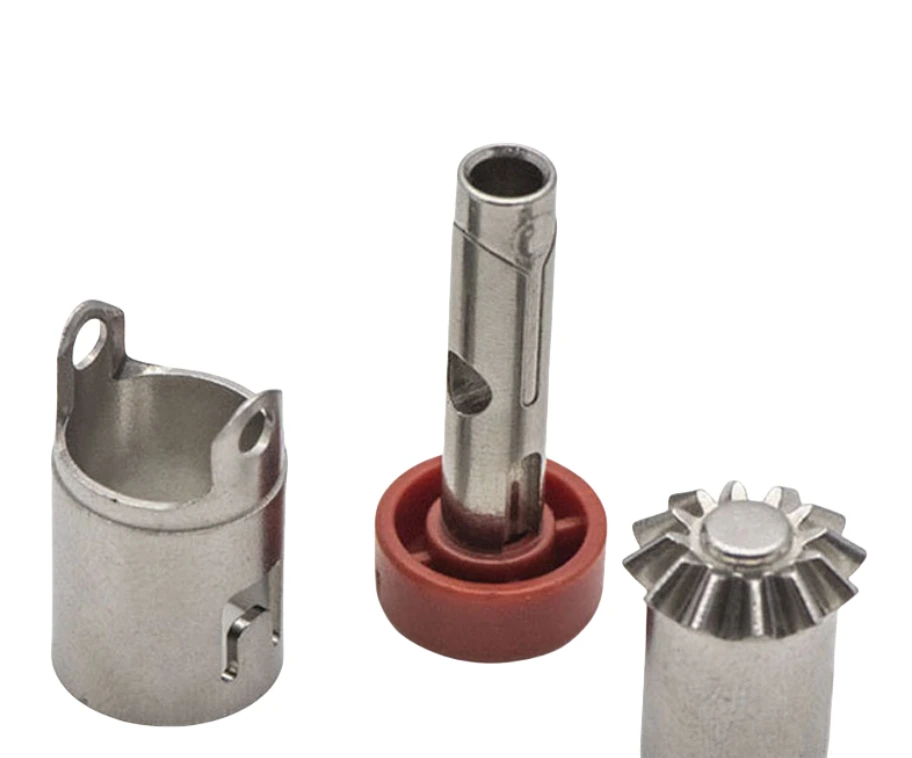
What structural metal parts provide in a phone-related assembly
Review this component together with its mating parts and delivered condition. The interfaces below define the drawing information needed to assess forming, finishing and inspection.
The source group is a geometry reference; the actual device interface must be specified.
Component identity, attachment and device interfaces
Identify the exact component and its attachment to the device.
For a shaft or sleeve form, define the axis and shoulders; for a support, define the locating faces.
Why identify the actual component before choosing PM?
A reference group can include shapes with very different manufacturing needs.
A shaft, sleeve and support are not one process specification.
Identifying the exact component first allows material, geometry and final interfaces to drive the route comparison.
Conventional PM versus machining for actual sections
Compare conventional PM, machining and other forming methods against the actual section and features.
A process label is not a final route decision for a new drawing.
The proposed route is confirmed for your drawing, material and quantity. An image does not establish a fixed tolerance or a complete process specification.
Compare manufacturing capabilities →Structural part base material and finish requirements
Define base material, final condition and cosmetic finish separately.
Identify visible faces, permitted edge rounding and the dimensions that must be met after finishing.
Any magnetic, electrical or acoustic requirement needs its own specification.
Review material-selection information →Locating geometry, clearance and final-condition checks
Check the chosen component's locating geometry, clearances and final condition.
Do not transfer specifications between different forms in the source group.
Specify the drawing revision and the condition in which each dimension is inspected. Record the agreed dimensional and functional checks before sample approval.
Quality documentation →Prepare a Product-Specific RFQ
- Component definition. Send the 2D drawing and 3D model, where available, with the drawing revision and the requested part or assembly scope.
- Mating information. Include the assembly references needed to define the interfaces discussed above.
- Delivered condition. State material, finishing and inspection requirements, identifying any items that need a manufacturing recommendation.
- Supply plan. Include sample needs, expected order and annual quantities, packaging requirements and target timing.
Product Questions
Does a PM label fix the process for a new phone part?
No. The new geometry, material and quantity still require an independent manufacturing review.
Why identify the actual component before choosing PM?
A reference group can include shapes with very different manufacturing needs. A shaft, sleeve and support are not one process specification. Identifying the exact component first allows material, geometry and final interfaces to drive the route comparison.
How are appearance and functional fit checked?
Check the chosen component's locating geometry, clearances and final condition. Do not transfer specifications between different forms in the source group.
Technical Context
The product-specific notes above identify drawing-review questions. General process and material references are collected separately; they do not verify a material grade, production qualification or performance claim for the pictured part.
Manufacturing and material references →