
By SINTS · Drawing-based engineering and sourcing guidance.
Start with the gear in its assembly
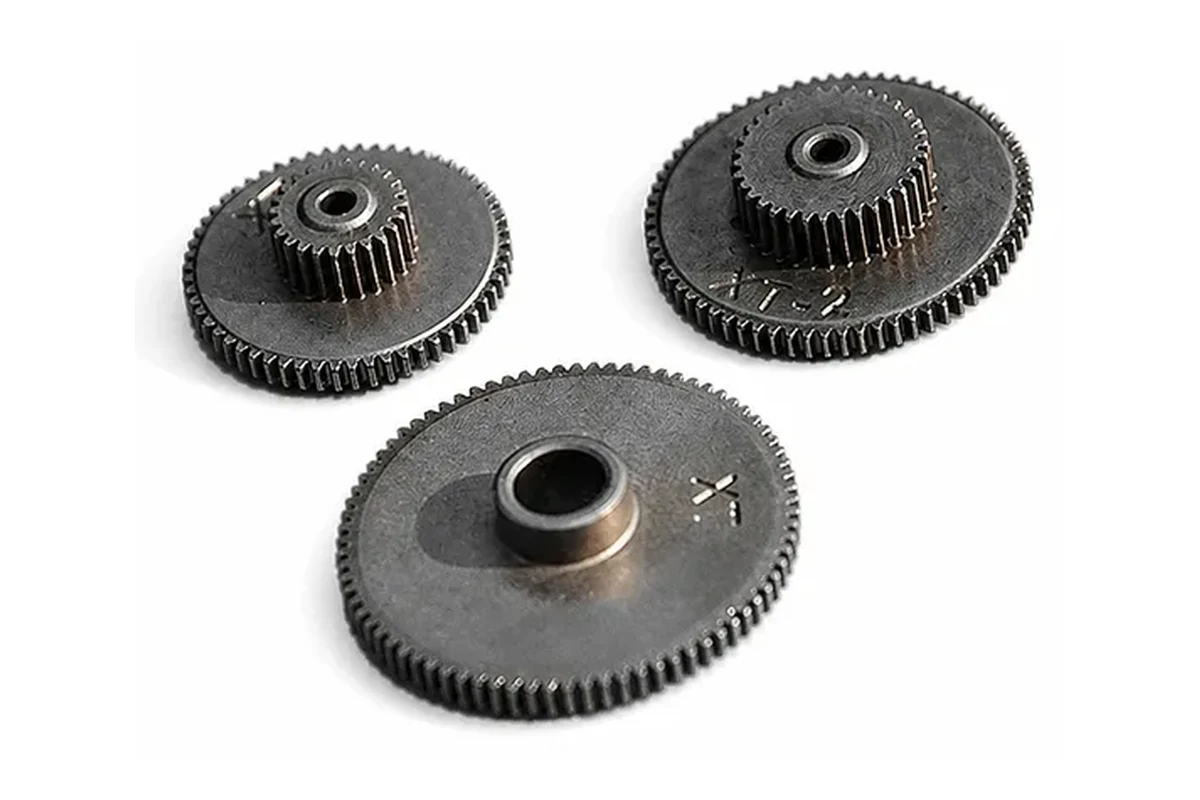
A useful powder metallurgy gear RFQ explains what the gear must do and how it connects to the rest of the mechanism. Send the controlled drawing, a matching model and the operating context together. A model can describe shape, but it may not communicate the inspection method, accepted variation or final material condition. Identify which document governs if the two disagree.
This is a purchasing and engineering review checklist, rather than a tooth-design calculation. It helps both sides identify missing information before selecting tooling or comparing prices. A supplier should be able to separate a firm requirement from a proposal that still needs approval. If a value is unknown, label it open instead of filling the field with a guess.
Describe the teeth and their reference surfaces
State the tooth count, module or diametral pitch, pressure angle, face width and relevant tooth modifications on the drawing where applicable. Identify the gear type and supply the mating gear information needed to understand contact. A picture of an existing gear is useful context, but it cannot replace the definition of the tooth geometry.
Explain how the gear is located in the assembly. Mark the bore or shaft interface, seating face and the relationship between these surfaces and the teeth. Ask engineering to agree how runout and other critical characteristics will be measured. Two reports can appear inconsistent when their datum setup differs, even if they describe the same physical part.
| Review item | Provide or agree | Decision to close |
|---|---|---|
| Geometry | Tooth definition and controlled drawing revision | Resolve model/drawing differences |
| Interfaces | Bore, seating face and tooth datums | Agree measurement setup |
| Duty | Load history, speed, lubrication and environment | Identify unknown operating conditions |
| Final condition | Material, treatment and controlled surfaces | List proposed secondary operations |
| Commercial basis | Volumes, tooling, samples and inspection scope | Compare equivalent supply scope |
Provide the duty, rather than a single torque label
Describe normal operation, starts and stops, reversal, shock events, speed and the expected service environment. State whether a supplied torque represents continuous operation, a short peak or a stall condition. Include lubrication and the mating material when known. These inputs support an application review; they do not establish the gear's load capacity by themselves.
If the existing assembly has noise, wear or tooth damage, describe where and when it occurs. Share photographs with permission and distinguish observations from suspected causes. A request to make the gear harder may miss a contact, alignment or lubrication issue. Agree what evidence will be used to decide whether a proposed change addresses the actual problem.
Define material and final condition together
Provide the material designation and the required condition at delivery. Density, heat treatment and surface requirements should be stated when they are controlled by the application. Do not assume that a nominal chemistry establishes every mechanical property, or that changing a treatment leaves all dimensions unchanged.
Ask the supplier to identify proposed secondary operations and which surfaces they control. Keep any alternative material or treatment visibly separate from the requested specification. If alternatives are welcome, compare them against the same functional requirements and validation plan. Approval should cover the final route, not only the material name on the quotation.
Compare quotations on a common basis
Provide annual demand, expected order quantities, launch timing and the drawing revision. Ask for tooling, sampling, secondary operations, inspection documentation and packing assumptions to be identified. A lower unit price is difficult to assess when the quotation excludes a finishing step or assumes a different inspection scope.
Before releasing tooling, close the list of open requirements and record any accepted exceptions. Decide which checks establish sample approval and which will be repeated during production. Retain the approved quotation, drawing and review notes as one package so that later changes can be assessed against the same baseline.
Example: an incomplete replacement-gear inquiry
Suppose a buyer sends a model and asks for a gear equivalent to an existing assembly. The model shows a bore and teeth, but the drawing does not define the tooth inspection or the condition in which the bore is accepted. The first useful response is a list of questions, not a guaranteed production route. Ask which surfaces locate the gear, whether the bore is checked before or after finishing, and what information is available about the mating gear.
The buyer can then return a marked drawing, identify the unresolved operating inputs and request a quotation with explicit assumptions. The supplier can separate included operations from options and identify any acceptance questions still open. This is an illustrative review sequence, not a completed SINTS customer project. Its purpose is to show how a short technical clarification can make two quotations comparable before purchasing commits to tooling.